

About this episode:
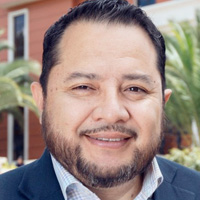
This episode finds David in conversation with the Galápagos-born geographer, Director of Universidad San Francisco de Quito’s Galápagos campus and Co-Director of the Galápagos Science Centre, Professor Carlos F. Mena (recorded with a chorus of barking sea lions providing an unmistakably local backdrop!)
From a NASA fellowship and early work modelling human behaviour in the Amazon, Carlos explains how his research led to a simple, uncomfortable truth: conservation succeeds or fails at the level of families. In places where survival is precarious, the forest becomes a bank account — and any environmental message that ignores poverty, health and education is doomed to stay theoretical.
From there, the conversation moves to the Galápagos as a living, inhabited system: a place of extraordinary protection and extraordinary pressure. Carlos describes the islands’ dependence on tourism, the “fortress conservation” model that tightly regulates both people and nature, and the political push to open the archipelago to outside investment. They explore how the Science Centre builds trust with local communities after a history of extractive science, why co-authorship and two-way learning matter, and how citizen-science livelihoods emerged in the shock of COVID.
The episode ends where it began — with sea lions spilling into town — as Carlos unpacks the new sea lion management plan, the challenge of educating residents and tourists alike, and the looming threat of disease in small, irreplaceable populations.
This episode was recorded live at the Galápagos Science Centre on Isla San Cristóbal in the Galápagos.
David's thoughts:
Of everything Carlos said during our conversation, one thing blindsided me more than any other interview moment in recent memory. I prepare carefully. I read. I research. I sketch out threads to follow. And yet, very early on, Carlos said something I hadn’t anticipated at all – to paraphrase: the greatest tool conservation has is family.
At first glance, it sounds like a line from a 1990s Hollywood family film; warm, sentimental, vaguely saccharine. The sort of thing you might be tempted to nod at politely and move past. But the more I have sat with it, the more profound it has become. It is, fundamentally, a statement about value(s).
Of course, as a father, I want to believe it. I want to believe that having children sharpens one’s sense of stewardship – that it lengthens time horizons, forces us to think in decades rather than quarterly returns. My family absolutely fuels my conservation instincts. It makes the work feel urgent and continuous. But here’s the uncomfortable counterpoint: many other people with children act in ways that seem diametrically opposed to conservation. So where, then, do they place the value of their children’s futures? What do they believe will secure their offspring’s wellbeing for generations to come?
Carlos offers a metaphor that begins to answer that question. For many communities – particularly in the Amazon – the forest is their bank. It is the store of value. It provides security, sustenance, and intergenerational stability. At first, I almost recoiled at that framing, as though it risked dragging nature down into the realm of currency. But my aversion to the terminology reveals more about my frustration with the world’s distorted understanding of finance than about the forest itself.
If the forest is the bank, then it is a bank that pays out in oxygen, rainfall, soil fertility, protein, medicine, climate stability. It is a life-support system. It is the ultimate long-term investment – accruing interest in an ever-broadening web of biodiversity. It is where I deposit all I can.
And yet, for much of the modern world, the answer to the question of enforcing their children’s security is pleasingly /misleadingly simpler: money. It is an understandable instinct. Provide well. Earn more. Build a nest egg. Construct insulation against uncertainty. Protect your family for a generation or two (or more if you’re very fortunate) through material means. But particularly at the wealthier echelons of an increasingly polarised society, sufficiency often mutates into accumulation. Wealth ceases to be a buffer and becomes an end in itself. (I’m saying nothing new here.)
The deeper tragedy is this: financial resilience is pursued while the only system that underwrites all wealth – the biosphere we call Earth – is neglected. Every asset, every market, every industry ultimately depends on ecological stability. Undermine that foundation, and no portfolio is diversified enough to compensate. (These concerns are no longer fringe; my government has begun formally assessing biodiversity loss and ecosystem collapse as matters of national security – it makes for depressing, albeit not surprising, reading: https://www.gov.uk/government/publications/nature-security-assessment-on-global-biodiversity-loss-ecosystem-collapse-and-national-security).
As more of us prioritise financial security over natural security, the timeframe in which money can meaningfully shield a family grows shorter. Climate volatility. Food instability. Water scarcity. Ecological breakdown. These are not abstract threats; they are limiters of economic insulation. In fact, there may come a point where wealth alone cannot protect one’s own children in the immediate term. And beyond that lies an even harsher reckoning: the possibility that true provision means sacrificing comfort now to safeguard the families of families of families yet to come. These theoretical concerns are rapidly becoming existential ones that must be addressed – and not simply by governments’ scientific advisors.
Financial markets are human-made systems which most of us only partially understand – and they fall apart with alarming regularity. The biosphere, by contrast, is a far older, more intricate network, shaped over immense timescales by forces beyond us. It has endured mass extinctions before; five great collapses, followed by astonishing (sloooooow) recoveries. And, yes, the science increasingly suggests we are accelerating faster than ever before toward another. But, any multifaceted, interconnected system – whether global finance or a rainforest ecosystem – must be approached with humility, especially if we are trusting our children to its protection. Pull at the wrong threads without understanding the web, and the web can fail. And when it fails, it does not harm just one investor or one family. It harms everyone. Every family.
Which brings us back to Carlos…
He has spent his life studying networks – ecological systems, social systems – and how they interweave. This systems thinking underpins how he runs the Galápagos Science Centre. Research is not isolated from the community. Conservation is not isolated from economics. Policy is not isolated from culture. Everything interconnects. And perhaps that is where “family” stops sounding sentimental and starts sounding strategic. Family is the smallest unit of long-term thinking. It is where values are transmitted. It is where time horizons stretch beyond an individual lifespan. If conservation can root itself there, in households, in intergenerational responsibility, it ceases to be an abstract environmental agenda and becomes something intimate and durable. Anyone who can hold those vast, interlocking systems in their mind and remain pragmatic and hopeful is doing something remarkable. I believe Carlos is one of those people. And if he is right, if family truly is conservation’s greatest tool, then perhaps the most radical thing we can do is not merely protect forests as banks, but raise children who understand why they are priceless.
LINKS:
Profile USFQ – https://www.usfq.edu.ec/es/perfiles/carlos-fernando-mena-mena
USFQ – https://www.usfq.edu.ec/en/
Galapagos Science Centre – https://www.galapagosscience.org/


